
Wine Crimes, Part 2: Dr. Conti
|
THE SATURDAY SOMMELIER |
|
Last week we covered four wine scandals: the Austrian antifreeze affair, the Jefferson Bottles, Brunellopoli, and the Sassicaia counterfeits. The story we saved for this week is the one that makes all four of those look like warm-ups. It involves a single man and thousands of fake bottles of Domaine de la Romanée-Conti, and a wine world that was so eager to believe in him that it handed him $28 million before asking a single hard question. |
|
|
THE MAN: WHO IS RUDY KURNIAWAN? Rudy Kurniawan arrived in California in the late 1990s on a student visa, ostensibly to study accounting at Cal State Northridge. What he did instead was reinvent himself, with remarkable success, as one of the most trusted figures in American fine wine. His family had money (his father ran a beer distribution empire in Indonesia) and Rudy spent it freely. By the mid-2000s he was spending up to $1 million a month at auction, hosting lavish tasting dinners for billionaire collectors, and pouring wines from what he described as a cellar of almost incomprehensible depth: case after case of the rarest Burgundy in the world, the kind of bottles that don’t exist on the open market. He dressed impeccably. He had the right watches, the right cars, the right friends. He had, according to everyone who knew him, an extraordinary palate. His nickname was Dr. Conti, for his apparent devotion to Domaine de la Romanée-Conti. He was, by any measure, the most exciting new presence in American wine collecting in a generation. Nobody asked too many questions about where all the wine came from. The answer, it turned out, was his kitchen. |
|
THE SCHEME: HOW HE DID IT The basic mechanism of Kurniawan’s fraud was simple, if extraordinarily labor-intensive. He purchased large quantities of older, legitimate but less valuable Burgundy, and re-labeled them as legendary bottles from celebrated producers and sought-after vintages. He also had a genuine understanding of wine that most counterfeiters lack. He could taste an older Burgundy and assess whether its character was plausible as a given producer’s wine. He adjusted blends. He chose his source material carefully. The forgeries were, by most accounts, convincing enough to fool experienced collectors and sommeliers — and in a category where the wines are so rarely tasted and so deeply mythologized, convincing enough was more than sufficient.
|
|
|
|
The wines Kurniawan targeted most aggressively were the rarest Burgundies in the world, some of which we carry, with provenance that's documented (more on that at the end). |
|
|
|
2006: The Peak |
|
Kurniawan consigns two auctions at Acker Merrall & Condit, netting $10.6 million at the first and a record-breaking $24.7 million at the second. At the time, it was the largest single-consignee wine auction in history. He is at the height of his influence. Nobody in the room is suspicious. |
|
|
|
2007: First Cracks |
|
Christie’s pulls a consignment of what were supposed to be magnums of 1982 Château Le Pin because the winery says the bottles are fake. Sotheby’s identifies a consignment of 1947 Château Lafleur as suspicious: Kurniawan had offered more magnums than were ever produced in that vintage. Warning signs accumulate. |
|
|
|
2008: Laurent Ponsot Flies to New York |
|
Kurniawan consigns 97 bottles purportedly from Domaine Ponsot, including Clos Saint-Denis vintages ranging from 1945 to 1971. The problem: Domaine Ponsot had never made a Clos Saint-Denis before 1982. Laurent Ponsot, the domaine’s proprietor, hears about the lots, flies to New York, and insists Acker withdraw every bottle. |
|
|
|
2008-2012: The Investigation |
|
Laurent Ponsot works quietly with the FBI for nearly four years, feeding agents evidence and intelligence. Collector Bill Koch files a civil suit in 2009, specifically alleging Kurniawan sold him two bottles of fake 1934 Romanée-Conti among other fraudulent bottles. Ponsot, conducting his own parallel investigation, later states he found counterfeit DRC in collectors' cellars across the US, Europe, and Asia. A 183-page thread documenting suspected fake bottles appears on WineBerserkers.com. Kurniawan continues selling through straw buyers. |
|
2012: The Raid |
|
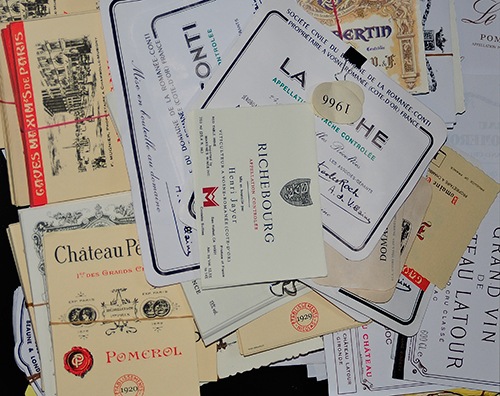
On the morning of March 8th, FBI agents arrest Kurniawan at his home in Arcadia, California. Inside they find what prosecutors would later describe as a counterfeit wine assembly line: thousands of freshly printed fake labels, the majority for Domaine de la Romanée-Conti. Corks from dozens of producers, custom stamps, authentic French wax, and inexpensive Napa and Burgundy wines with handwritten notes indicating which famous bottles they would become. In all, Kurniawan may have sold as many as 12,000 counterfeit bottles. |
|
2013: Conviction |
|
A federal jury convicts Kurniawan on December 18th. He is the first person ever tried and convicted for wine counterfeiting in the United States. He is sentenced to 10 years in prison and ordered to pay $28.4 million in restitution to seven victims, plus forfeit $20 million in property. Among his victims: a CFO defrauded of $3.1 million and a tech co-founder who paid over $15 million for fake bottles. |
|
2021: Deportation |
|
After serving approximately seven years, Kurniawan is released into immigration custody and deported to Indonesia. He owed $28.4 million in restitution. He paid none of it, claiming bankruptcy. Bill Koch, who won a separate $3 million civil settlement, never collected. According to subsequent reports, Kurniawan is now based in Singapore. |
|
|
|
|
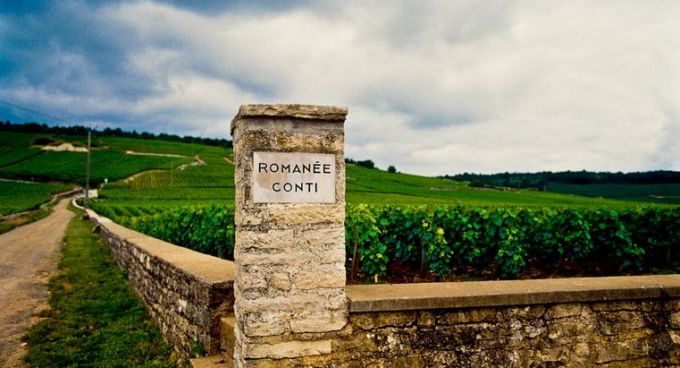
WHY DRC? Understanding why Kurniawan focused so heavily on DRC requires understanding what DRC is. If you’re not already in the rabbit hole, it's one of the more extraordinary stories in all of wine. Domaine de la Romanée-Conti sits in the village of Vosne-Romanée in Burgundy’s Côte de Nuits. The estate traces its origins to the 13th century, when it was farmed by monks from the Abbey of Saint Vivant. The flagship vineyard (Romanée-Conti itself) covers just 1.8 hectares and produces between 5,000 and 6,000 bottles per year. Every vineyard in the DRC portfolio has Grand Cru status. Annual production across all eight wines combined is roughly 35,000 cases. For context, a moderately sized California winery might produce more than that from a single block. The scarcity is structural and irreversible. The vines are old, the yields deliberately low, the land finite. And demand has grown exponentially as global wealth has concentrated in the hands of collectors who treat fine wine the way others treat art. A single bottle of 1945 Romanée-Conti sold at Acker’s La Pauíe auction in 2024 for $812,500, the most expensive bottle of wine ever sold. That vintage produced approximately 600 bottles. Thousands of bottles claiming to be 1945 Romanée-Conti have been traded over the decades. For a counterfeiter, DRC represents the ideal target: a wine so rare that almost no one who buys it has a legitimate reference point for what it should taste like, so prestigious that buyers are psychologically inclined to believe what’s on the label, and so expensive that even a modestly convincing forgery returns enormous profit. Kurniawan understood this. The thousands of freshly printed DRC labels the FBI found in his kitchen were not an accident.
|
|
|
|
WHICH IS WHY PROVENANCE MATTERS We carry DRC and many of the other producers targeted by Kurniawan. The Kurniawan story is not a reason to be afraid of buying high-end burgundy. It’s a reason to care about provenance, which means understanding the supply chain that brought a specific bottle from domaine’s cellar to our shelves. |