
The Sommelier vs. the Algorithm
|
THE SATURDAY SOMMELIER |
|
We’ve been asked about this a lot lately. Can’t you just use ChatGPT for wine recommendations? Doesn’t Vivino do what you do? If AI can pass the bar exam and write a screenplay, surely it can tell someone what bottle to buy. |
|
|
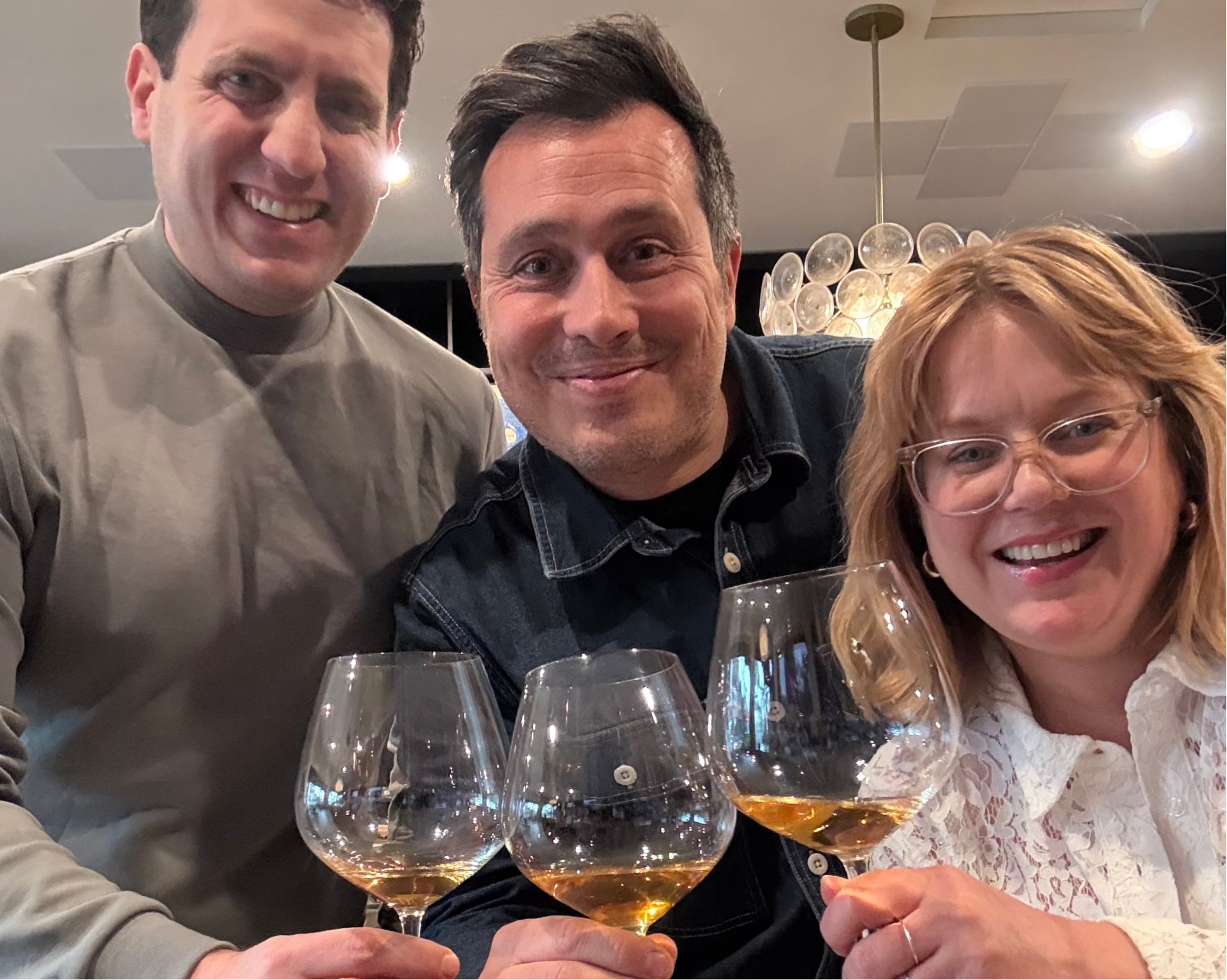
Anthony, Ferdy and Alyssa, at your service. |
|
OUR WINE TASTINGS |
|
Signature $20 An introduction to exceptional wines. |
|
Blind $25 Taste without labels. Let your palate decide. |
|
Reserve $35 Standout, cellar-worthy pours. |
|
Somm Selection $40 Hand selected for your palate. The most personal tasting we |
|
|
|
WHAT AI DOES WELL
|
|
AI does well |
|
Encyclopedic recall of regions, producers, grapes, vintages, and appellation rules. Ask it about the soil composition of a specific Burgundy village and it will tell you instantly. No human can match the breadth of its stored information. |
|
AI falls short |
|
It doesn’t know what’s actually on your shelf today, what drank well last week, or which producer just released something extraordinary that hasn’t been written up yet. |
|
AI does well |
|
Given enough purchase history and ratings, AI can identify correlations between what you’ve liked before and what you might like next. This is what Vivino, Delectable, and similar apps do, and for a certain kind of casual buyer, it works. |
|
AI falls short |
|
Correlation is not understanding. It can tell you that people who bought X also bought Y. It cannot tell you why, or whether that pattern applies to you specifically given where you are in your wine journey right now. |
|
AI does well |
|
AI tools connected to inventory databases can find a specific wine at the best price across multiple retailers in seconds. For value-hunting on a known bottle, it’s very hard to beat. |
|
AI falls short |
|
It cannot tell you whether that $45 bottle from a new producer is worth the gamble, or whether the $28 bottle from the estate next door is better this vintage. That judgment requires a human who has tasted both. |
|
|
|
FIVE THINGS THAT REQUIRE A HUMAN
|
|
1. Reading the Room
|
|
When someone walks into the shop, we read them before they say a word. Are they in a hurry or browsing? Do they look like they’re buying a gift or something for themselves? Are they nervous, confident or curious? Are they celebrating something? That initial read can change the interaction, and we might use different vocabulary, ask tailored questions, adjust the price range we steer toward and the energy we bring. AI has no body to read and no room to stand in. Every interaction it has starts from the same neutral ground.
|
|
2. Accumulated Context
|
|
This is the one that AI is furthest from replicating and it’s the one we’re most proud of. We know our regulars. We know that one client always comes in before a BBQ and doesn’t want to think about it. We’ve learned that the question isn’t “what do you like” but “what are you grilling and how are you preparing it.” That single question short-circuits a ten-minute discovery process because we’ve had this conversation enough times to know exactly what she needs. She is in and out in five minutes and doesn't have to think about it. We have another client whose weekly order is twelve bottles. We know his world: Barolo, rosé, Champagne (but never rosé Champagne) and Napa reds. We know when he’s entertaining versus drinking alone, and the selection shifts accordingly. We don’t ask him what he wants anymore because we already know.
|
|
3. Tasting Memory
|
|
AI cannot taste. This sounds obvious, but it’s worth sitting with for a moment. Every recommendation a human sommelier makes is grounded in sensory experience of what a specific wine actually tasted like, how it evolved in the glass, whether it over-delivered or under-delivered relative to its reputation and price.
|
|
4. Responsibility and Risk
|
|
When a sommelier recommends a bottle, they’re putting their judgment and reputation behind it. That accountability changes the quality of the recommendation in ways that are hard to overstate. AI suggests. It does not commit. There is no version of an AI system that feels embarrassed when a recommendation doesn’t land, or that thinks carefully before making a call because it knows the person asking will come back and tell them how it went. The feedback loop that makes human sommeliers better at their jobs over time is fueled by exactly this kind of stake in the outcome.
|
|
5. The Experience Itself
|
|
Wine is not a problem to be optimized. It’s a pleasure, and part of that pleasure, for a lot of people, is the human moment that surrounds the bottle. The conversation at the counter. The story about why this producer does things differently. The recommendation that turns into a twenty-minute rabbit hole about the Judgment of Paris. The moment where someone who came in for a Tuesday-night red walks out genuinely excited about something they’d never heard of before. AI can optimize a transaction. It cannot create an experience. And the experience, for the people who keep coming back to a shop like this one, is a significant part of what they’re here for.
|
|
|
WHERE AI FITS, AND WHERE IT DOESN'T We use technology. We’re not opposed to AI in the wine world and it’s genuinely useful for certain things, and we’d be naive to pretend otherwise. Some of the best working sommeliers use AI to draft training documents, research unfamiliar regions, or cross-reference vintage reports. As a research tool and a starting point, it’s excellent. The threat to the sommelier’s job, if there is one, comes not from AI being too good at the human parts, but from customers who mistake the data retrieval for the relationship. If someone believes that getting a wine recommendation means getting a correct answer to a query, then yes, AI can do that. If they understand that what they’re actually getting from a good sommelier is years of accumulated taste memory, deep knowledge of their personal preferences, professional accountability, and a genuine human investment in getting it right, then no, an algorithm is not a substitute. The people who come back here week after week aren’t coming back because we have a database. They’re coming back because we know them.
|
|
|
|
COME EXPERIENCE IT FOR YOURSELF Everything in this issue happens in person at the wine bar, every day. Our sommeliers lead four tastings, including a Sommelier Selection tasting where we choose for you, which is about as close as you can get to what we've been describing here without being one of our regulars yet. No algorithm involved. |
|
WINE TASTINGS |
|
Signature $20 An introduction to exceptional wines. |
|
Blind $25 Taste without labels. Let your palate decide. |
|
Reserve $35 Standout, cellar-worthy pours. |
|
Somm Selection $40 Hand selected for your palate. The most personal tasting we |
|
|
|
Come in and let us know what you’re thinking about. The conversation is always the best part. |