
The Natural Wine Debate
|
THE SATURDAY SOMMELIER |
|
We’re going to do something a little different this week. Natural wine is one of the most genuinely contentious topics in the wine world. We’re going to lay out the real arguments for and against and let you decide. The debate deserves a fair hearing, because both sides have good points. |
|
|
|
|
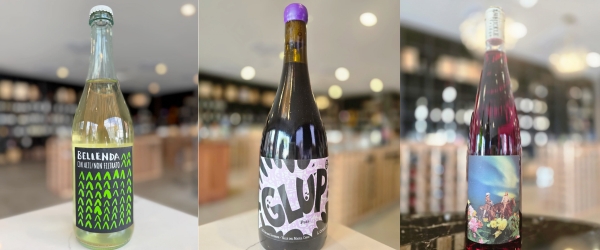
★ THIS WEEKEND ★ with Anthony Hirsch farms biodynamically, uses native yeasts, and intervenes as little as possible in the cellar. But the wines don’t announce themselves as “natural.” They’re precise, structured, and serious in the way that great Burgundy is serious. They’re the best argument we know for what natural winemaking looks like when it’s done right.
|
|
|
|
WHAT IS NATURAL WINE, ACTUALLY? Here’s the first complication: there’s no legal definition of natural wine. Unlike “organic” or “biodynamic,” which have certification bodies and specific requirements, “natural” is a marketing term that anyone can use for any reason. In practice, the natural wine movement coalesces around a set of loosely shared principles:
|
|
|
THE CASE FOR Why Natural Wine’s Defenders Are Onto Something The arguments for natural wine are not just aesthetic. Some of them are pretty hard to argue with.
|
|
THE FARMING ARGUMENT:
|
|
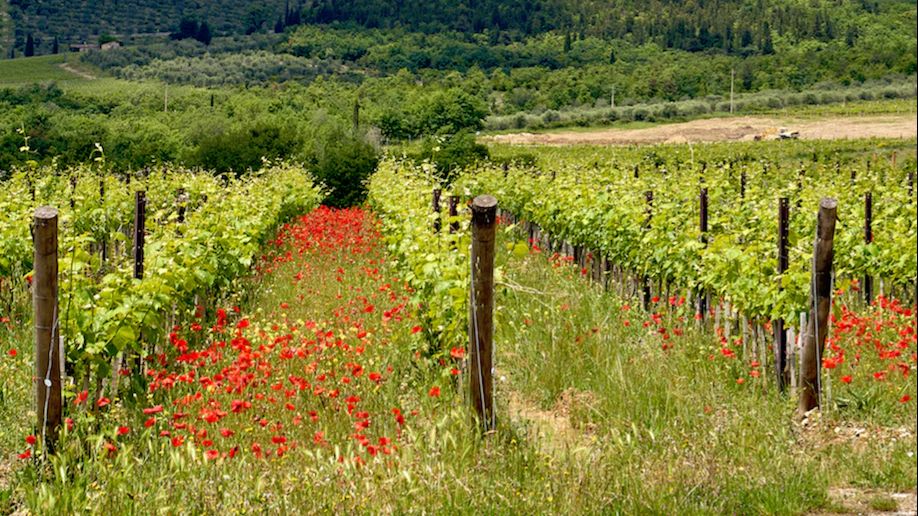
Organic and biodynamic farming is genuinely better for the land, the soil biome, and long-term vine health. Whatever you think about what happens in the cellar, vineyards that use fewer herbicides and pesticides are healthier ecosystems. This isn’t controversial in agriculture - the controversy is about whether it matters enough to justify the wine’s other idiosyncrasies.
|
|
THE COUNTER:
|
|
Plenty of conventional winemakers farm organically or sustainably without labeling their wines “natural.” The farming argument is real but it doesn’t necessarily apply only to natural wine producers. You can farm responsibly and still add a little sulfur at bottling.
|
|
THE TERROIR ARGUMENT:
|
|
If you add commercial yeasts that are the same in every winery across the world, you homogenize the flavor of wine. Native yeasts (the wild yeasts that live in your specific vineyard and cellar) are part of what makes a wine from one place taste different from a wine from another. Suppressing them with additions suppresses terroir.
|
|
THE COUNTER:
|
|
Commercial yeasts exist because fermentation with wild yeasts is unpredictable and sometimes goes wrong in ways that produce off-flavors and faults. The terroir argument is compelling, but it assumes the wild fermentation works correctly, which isn’t always true.
|
|
THE TRANSPARENCY ARGUMENT:
|
|
Conventional winemaking permits the addition of a startling number of additives: yeasts, enzymes, tannins, acid, sulfur, Mega Purple (a color additive). None of these have to be disclosed on the label. Natural wine producers argue that a wine with nothing added is simply more honest — what you taste is what was in the vineyard.
|
|
THE COUNTER:
|
|
This is the natural wine movement’s strongest argument, and it’s one the conventional wine industry has never adequately addressed. Labeling transparency in wine is genuinely poor. But “no additions” doesn’t guarantee a great wine — it just removes the safety net.
|
|
|
|
|
|
THE CASE AGAINST Why the Critics Have a Point Too The natural wine movement has attracted some of the wine world’s sharpest critics, and not just the stuffy ones. Here’s what bothers people.
|
|
THE FAULTS ARGUMENT:
|
|
A significant number of natural wines are flawed. Brett (barnyard/Band-Aid aromas), VA (volatile acidity, which smells like vinegar or nail polish remover), mouse (an off-flavor that lingers on the palate) — these are technically defects in winemaking. In conventional wine, they’re corrected. In some natural wine circles, they’re celebrated as “character.”
|
|
THE COUNTER:
|
|
This is true of some natural wines, and the natural wine community has done itself no favors by romanticizing faults. But it’s also true that faults exist on a spectrum, and what one person tastes as a flaw another experiences as complexity. The barnyard note in a great Burgundy is technically Brett. Context matters.
|
|
THE CONSISTENCY ARGUMENT:
|
|
Without sulfur, wines are more vulnerable to oxidation and bacteria during transport and storage. A natural wine that tasted great at the winery in France may taste very different six months later on a shelf in Los Angeles. The producer’s intention and the customer’s experience can diverge significantly.
|
|
THE COUNTER:
|
|
Sulfur-free wines require better handling throughout production and the supply chain. That’s a genuine challenge and a legitimate criticism. But the answer is better production and supply-chain logistics, not necessarily adding sulfur. Some producers and distributors manage it well; others don’t.
|
|
THE IDEOLOGY ARGUMENT:
|
|
Natural wine has a cultural dimension that can feel overbearing. The implication, sometimes explicit, is that conventional wine is somehow dishonest, toxic, or morally inferior. Some natural wine bars and sommeliers have made guests feel judged for ordering “conventional” wine. That’s tiresome, and it has made many critics reflexively dismissive of the entire category.
|
|
THE COUNTER:
|
|
Fair. The culture around natural wine can be insufferable in exactly the way it gets accused of being. But the wine itself should be judged on its own terms, and the worst actors in the natural wine scene don’t represent the best wines, which are very good indeed.
|
|
★ KEEP EXPLORING ★ If this issue got you curious about natural wine, the Adventurer membership is the best way to keep exploring. Every month we hand-select two natural bottles, chosen by our sommeliers from what’s drinking well right now, along with tasting notes and pairing suggestions. ✓ Two natural wines per month, curated by our team ✓ 10% off all glass pours at the wine bar ✓ 5% off bottle purchases in store
|
|
|
|
WHERE WE LAND Our Take Our position is that the wine in the glass is what matters, and it doesn’t much care what philosophy produced it. We carry natural wines as well as wines made in a more conventional way. The best natural wines, made by producers who know what they’re doing in both the vineyard and the cellar, are some of the most interesting and alive wines we’ve tasted. The worst natural wines taste like expensive mistakes. A wine that smells like a wet dog and tastes like a kombucha that went wrong is not a natural wine success story. The farming arguments are the most persuasive part of the natural wine case. The no-sulfur absolutism is the least persuasive. A small amount of sulfur at bottling has been used to protect wine since Roman times. If you want to try some of the natural wines we stand behind, drop in to our wine bar for a glass or chat with us about a bottle recommendation.
|
|
|
|
We’d genuinely love to know what you think! Reply to this email or find us in store. This is exactly the kind of conversation we love to have. |