BURGUNDY, DECODED (part 1)

Image

THE SATURDAY SOMMELIER
June 6, 2026  |  ISSUE No. 29
Your weekly deep-dive into the world of wine & spirits


We're revisiting some of our favorite past issues while our writer Alyssa is on vacation. If you missed them the first time, now's your chance. If you didn't, they're worth a second read. Back with new issues soon! And as always, the shop is open and the wine bar is pouring.

BURGUNDY, DECODED (part 1)

Burgundy has a reputation for being expensive, confusing, and best left to collectors. But at its core, it’s one of the simplest and most expressive wine regions in the world.


Here’s the key to understanding it: Burgundy is about place, not grape variety.

Brand campaign image

In Burgundy, wines are rarely blended. While small amounts of other grapes exist, the region is overhwelmingly defined by two grape varitiies:

White Burgundy = Chardonnay
Red Burgundy = Pinot Noir


The region’s identity is shaped by how these grapes respond to subtle changes in soil, climate, and site - sometimes just a few rows apart.


In other words: one grape, a hundred expressions.

WHITE BURGUNDY:
Chardonnay through the lens of place

Chardonnay is famously adaptable, and nowhere does it show that range more clearly than Burgundy. Here, the grape acts as a lens for terroir, capturing soil, climate, and winemaking choices with remarkable clarity.

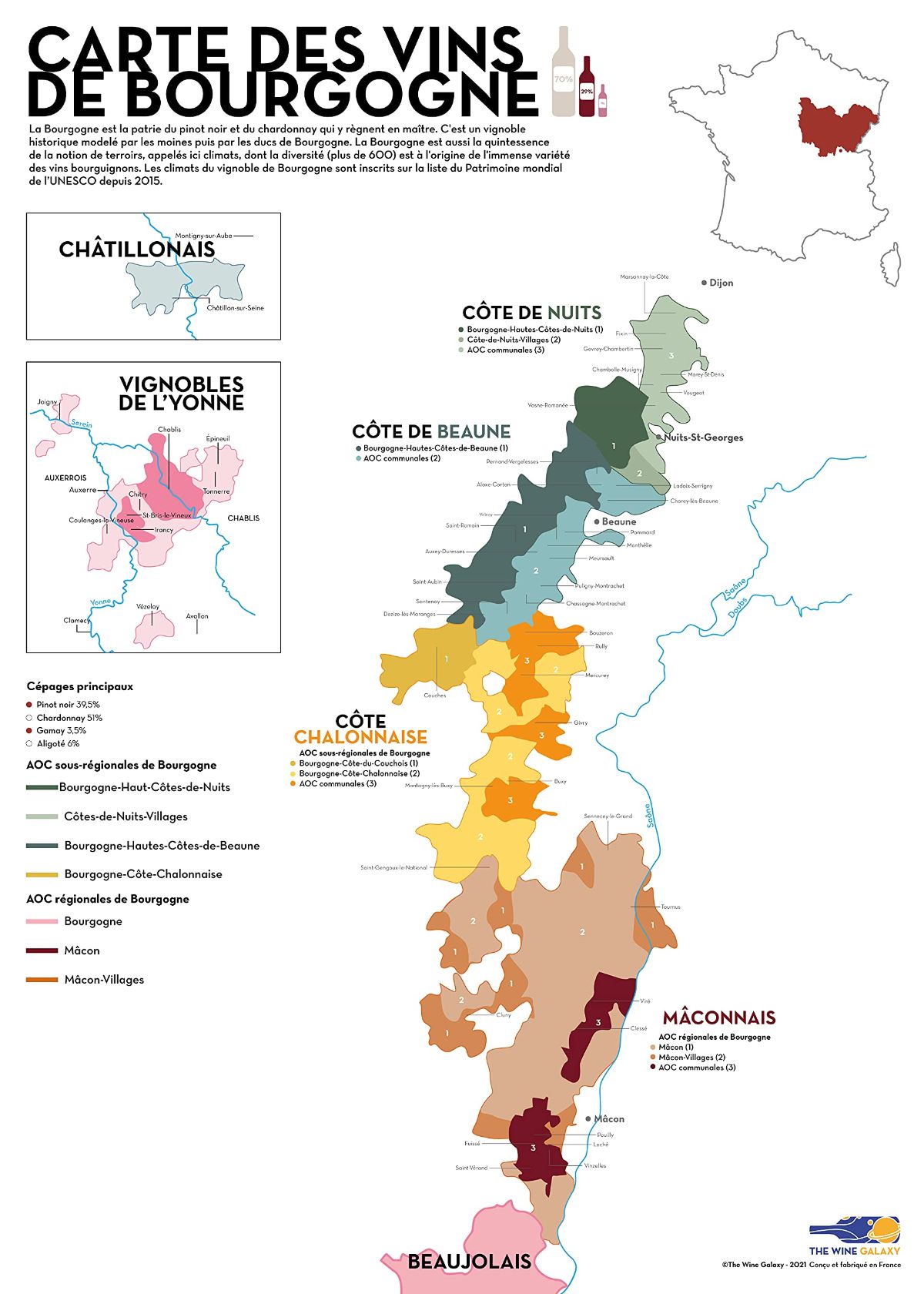
For example, each of these regions results in a different style:

  • CHABLIS
    Crisp, linear, and mineral-driven. Grown in cooler climates with limestone-rich soils, Chablis is often unoaked or lightly oaked, showcasing citrus, green apple, and a distinctly chalky freshness. Precision and tension are the hallmarks.

  • MEURSAULT
    Fuller-bodied and more textured, yet still balanced. Expect ripe stone fruit, hazelnut, and a creamy mid-palate shaped by oak aging—always anchored by natural acidity. Luxurious without being heavy.

  • MACON
    Sunny and approachable. These wines tend to be fruit-forward and easy-drinking, with notes of orchard fruit and soft citrus. A little extra warmth in the vineyard translates to generosity in the glass.

All Chardonnay, but completely different.

✨ At home challenge:
Pick up a Chablis and a Meursault. Open and taste them side-by-side, comparing the differences.

RED BURGUNDY:
Pinot Noir written by the soil

Pinot Noir is famously transparent—it reflects its surroundings more than almost any other grape. In Burgundy, that means subtle shifts in soil, slope, and exposure create dramatically different expressions, even village to village.

  • GEVREY-CHAMBERTIN
    The most powerful and structured style of red Burgundy. Dark cherry and blackberry fruit, savory earth, and a firm backbone that rewards time in the cellar. Think depth, seriousness, and quiet intensity.

  • NUITS-ST-GEORGES
    A balance point between power and polish. Dark fruit, spice, and a touch of ruggedness, often with a savory edge. These wines feel grounded and confident—excellent for pairing with richer winter dishes.

  • VOLNAY
    Silky, aromatic, and refined. Bright red fruit, floral notes, and an emphasis on elegance over muscle. Volnay is Burgundy at its most graceful

In Burgundy, Pinot Noir is all about nuance. It has a unique ability to feel special without being showy and age-worthy but still approachable. It's perfect for gifting, or opening at the table


✨ At home challenge:
Pick up a Gevrey-Chambertin and a Volnay. Open and taste them side-by-side, comparing the differences.

Brand campaign image

Stay tuned for Part 2 next week!
We'll build on this foundation and continue exploring Burgundy.

Back to blog